Jetsam Office
The Man Who LaughsThe Jetsam Office is the Admiralty office responsible for handling the recovered flask that exposes Gwynplaine’s birth and inheritance. Through a documented opening, sworn witnesses, a report to Queen Anne, and a formal confrontation, the office carries a piece of maritime wreckage into the machinery of law and brings a concealed royal crime into public view.
Mandate and Officials
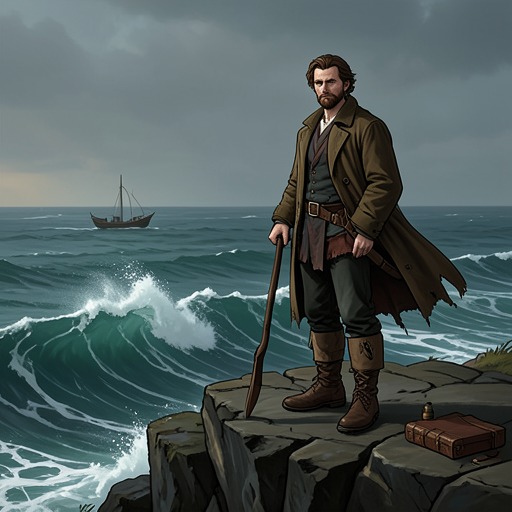
The evidence identifies the Jetsam Office through its role in the Admiralty’s treatment of objects recovered from the sea. Barkilphedro, an officer of the Admiralty, says the flask was found on the beach and brought to him to be unsealed under the duty and prerogative of his office. The episode presents that responsibility not as casual curiosity but as a regulated chain of custody: the bottle’s contents are opened and examined through named officials, then reported to the Crown.
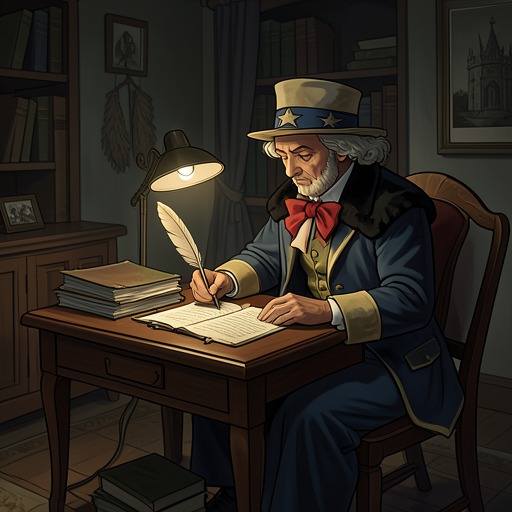
Two sworn jurors of the Jetsam Office took part in the examination: William Brathwait, representing Bath, and Thomas Jervois, representing Southampton. They deciphered and attested the parchment’s contents, signing an affidavit jointly with Barkilphedro. The scene gives the office a small but consequential institutional structure—an officer acting with sworn parliamentary jurors—without describing a wider staff or administrative hierarchy.
From Recovered Flask to Official Report
The flask bears Hardquanonne’s name. When it is first shown to him, he recognizes it as his, but refuses to answer after the enclosed parchment is read. The authorities treat that refusal as part of a legal proceeding: the parchment is read again, and the declaration and confession of Hardquanonne’s accomplices are put before him. The office’s work has thus moved beyond opening a recovered object; its attested contents become evidence that can be used to test a prisoner’s silence and establish the identity of the person described within.
Barkilphedro reports the discovery to Queen Anne. He states that, by the queen’s order, the necessary legal formalities were carried out with discretion because the case was delicate. This places the Jetsam Office between maritime recovery and royal government: it records and authenticates the material discovery, while the Crown directs the next formal steps. The passage does not present the office as deciding the succession claim itself; rather, its report initiates the process through which that claim is established.
Confrontation and Identification
The decisive stage is the fourth-day confrontation, described as the day legally set apart for it. The sheriff addresses Hardquanonne with the flask and parchment as the basis of the proceeding. Gwynplaine, the child named in the document, is brought before him; Hardquanonne then breaks his silence and recognizes his victim. The recognition connects the bottle’s written account to a living person, converting a recovered declaration into evidence identifying the child whose disappearance it describes.
The parchment states that the child had been abandoned on the coast of Portland at ten years old, after being sold at the age of two by order of King James II. It names him as Lord Fermain Clancharlie, the legitimate son of Linnæus, Lord Clancharlie and Ann Bradshaw, and the inheritor of his father’s estates and titles. It also says the child was sold, disfigured, and put out of the way because of that inheritance, then brought up and trained as a mountebank. The office’s authenticated discovery therefore does more than establish provenance: it reconnects Gwynplaine’s public identity as a performer with the noble identity deliberately concealed from him.
Legal Setting and Consequences
The proceeding belongs to a legal world in which formal process coexists with secrecy and executive power. The narrative describes unexplained arrests as a longstanding practice despite the Habeas Corpus Act, and characterizes silent captures as a means of reserving questions while matters remain obscure. Those practices are not attributed to the Jetsam Office. They form a contrast to its evidentiary function: the office’s sworn attestation and report bring a concealed matter into a procedure that culminates in confrontation rather than leaving it indefinitely undisclosed.
Other passages outline the layered responsibilities of local justice. Sheriffs receive commissions and are charged with escorting and protecting judges on circuit; their officers and justices of the quorum apprehend, examine, and imprison accused people for trial. In Gwynplaine’s case, the sheriff conducts the formal confrontation, while the Jetsam Office has supplied the authenticated object and record that make the identification possible. The distinction matters: the office is a crucial link in the legal chain, not the whole judicial apparatus.
Once Hardquanonne recognizes Gwynplaine, Barkilphedro explains the scale of the reversal: Gwynplaine is a peer, legislator, and judge, entitled to £40,000 a year, and is about to marry a duchess, the daughter of a king. Gwynplaine faints under the sudden disclosure. The office’s procedure has changed the meaning of his life in an instant, restoring a title and inheritance while exposing the violence by which they were withheld. Later, in the House of Lords, Gwynplaine interprets his forced smile as the mark of the suffering inflicted by rulers and presents himself as a symbol of the people. The Jetsam Office does not cause that speech, but the discovery it helped bring to light supplies the political history behind it: the royal act that made his face and the legal evidence that reveals his name.